

For sponsors developing early‑phase programs, volunteer and patient experience, compliance, and retention are not peripheral concerns — they directly influence timelines, data quality, and regulatory confidence. Selecting a CRO partner that places volunteers at the heart of their clinical programs offers several advantages: The CROs that are most committed to ensuring a positive and safe experience directly impacts retention rates, compliance, and the overall quality of clinical data.
Quotient Sciences has a long history of success in early development, across more than three decades and over 1,300 Phase I programs at our clinical sites in Miami (US) and Nottingham (UK). Our teams conduct first-in-human to proof of concept as well as a range of clinical pharmacology studies—including food effect, drug-drug interaction (DDI) and human ADME assessments.
With over 35,000 active healthy volunteers and specialized recruitment teams, we support a range of study designs, including those involving special populations, always aiming to deliver high quality data with an emphasis on safety, compliance, and operational reliability. Above all, volunteer satisfaction and safety throughout every trial.
According to Clare Preskey, Executive Director, Clinical Operations, “What differentiates our approach is not individual initiatives, but a formalized, long‑standing framework that embeds volunteer feedback into how studies are designed and delivered across both our US and UK clinics.”
A culture of volunteer centricity and advocacy
Inspired by patient centricity discussions happening at an industry-wide level, we’ve put a focus on healthy volunteer centricity for well over a decade and now the focus is back to include patients. At both of our clinics, our volunteer centricity group is made up of staff and volunteers who work to provide ongoing, independent feedback on procedures and documentation through open forums and regular input.
Our goal is to maintain a consistent approach that reflects volunteer perspectives in how studies are conducted, and strive for continuous improvement related to:
- Recruitment rates – 99% of our studies start on-time with full cohorts
- Volunteer retention on studies – >98% of our studies complete with full cohorts
- Volunteer well-being
- Volunteer satisfaction, resulting in a high proportion of repeat volunteers
- Compliance and treatment adherence
- Clear and concise documentation that is well understood by our volunteers
Group members work diligently to gather feedback from volunteers, review materials such as patient information sheets, and consider and act upon suggestions, offering feedback when appropriate. Both of our clinics follow a similar approach, ensuring consistency in the quality of studies and volunteer experience across our sites.
Our volunteers have expressed their appreciation for our teams taking their feedback into account and have highlighted to us the positive impact of these changes and benefit to overall well-being throughout their time participating in our study programs.
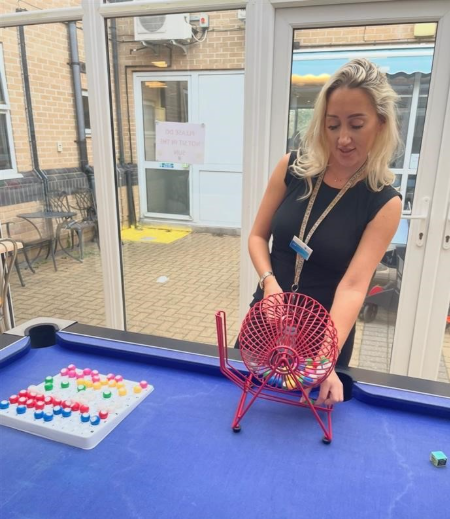
We routinely make improvements based on volunteer feedback. Our new, state-of-the-art facility, Lee House, at our Nottingham campus, features entertainment including dartboards, re-felted pool tables, new Xbox consoles, and new board games. We significantly updated our Nottingham clinic in 2024, with renovations including refreshing paint and flooring, as well as new mattresses, pillows, and linens. Additionally, we added a new outdoor space for volunteer enjoyment.
Similarly, our patient-centric practices complement our volunteer-centric initiatives. We have made adaptations in clinic processes to accommodate patient cohorts; for example, offering chaperones, offering remote participation when possible, adjusting clinic layouts to make room for additional equipment.
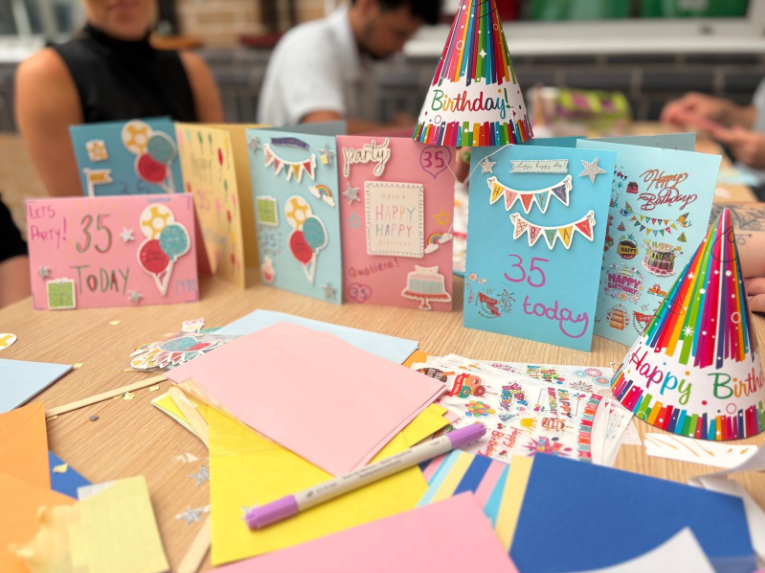
We take great pride in ensuring our volunteers have a positive experience working with us and are proud of the fact that volunteers have told us directly that our culture of volunteer centricity makes us a number one choice for volunteers wishing to participate in trials in the UK. In 2025, 100% of volunteers said they would come back to do another study and 100% would recommend us to a friend or family.
Diversity and inclusivity in clinical trial practice
As a global company, we value representing the communities we serve and our goal is to develop a diverse volunteer panel. For example, cultural adaptations for Japanese bridging studies have included providing on-site translators as well as translated menus, reading materials.
To enhance outreach to diverse and underrepresented populations, we offer targeted recruitment strategies including:
- Strategic partnerships with community organizations, faith groups, and local leaders
- Inclusive advertising using diverse imagery and culturally relevant messaging
- Multilingual materials and staff trained to communicate in participants’ preferred languages
- Simplified, plain-language documentation to improve accessibility and understanding
- Financial and logistical support such as travel stipends, childcare assistance, and flexible scheduling
Our team undergoes regular cultural competency training to reduce unconscious bias and improve participant experience. We also monitor diversity metrics throughout recruitment to identify gaps and continuously improve our approach.
While early phase trials typically involve small sample sizes and are not intended to be demographically representative of the patient population, they play a critical role in generating foundational safety, pharmacokinetic (PK), and pharmacodynamic (PD) data. We uphold a strict non-discrimination policy in line with all applicable laws, and our recruitment practices are designed to be fair, transparent, and inclusive. In accordance with UK Health Research Authority (HRA) and US Food and Drug Administration (FDA) guidance, we ensure that no individual is excluded unnecessarily. Where we identify inclusion criteria that may inadvertently exclude specific sub-populations, we proactively raise this with the sponsor to support more inclusive protocol design.
By embedding inclusivity into our recruitment strategy, we not only uphold ethical standards but also support our sponsors in meeting regulatory expectations and enhancing the robustness of their clinical development programs.
Adapting to the needs of our sponsors
Common sponsor questions to our teams are often focused on volunteer wellbeing, compliance, retention, and diversity. These factors are key elements considered by sponsors in decision-making, and our staff ensures processes are optimized in each of these areas.
In a recent clinical trial, to accommodate a sponsor’s request, our team took extra measures to ensure our volunteers were able to get outside for a walk and some exercise around the country park as often as possible to enhance their wellbeing and mental health whilst on trial.
Taking Part
We pride ourselves on our altruistic approach that underpins everything we do. By actively seeking and integrating volunteer feedback into study design and delivery, we aim to not only improve volunteer satisfaction but foster trust and engagement among participants. This approach leads to smoother study operations, higher rates of repeat volunteers, and greater regulatory confidence, ultimately supporting sponsors in delivering successful early-phase programs.
Want to learn more about our work in early clinical development or interested in taking part in one of our upcoming clinical studies? Visit our volunteer website for more information or don’t hesitate to contact our team today.